
Demystifying the EU Border Fuss: What Travellers Actually Need to Know
Subscribe to our newsletter for the latest expatriate news, views & analysis.
If you’ve been watching the news lately, you’ve likely seen the sensational headlines about massive delays, new bureaucratic red tape, and chaos at European Union borders. But how much of this is a genuine cause for concern, and how much is just media hype?
When you cut through the noise, the reality is quite simple: the EU is introducing electronic biometric border controls. It’s an upgrade designed to modernise the system, and it is closely aligned with protocols that have already existed in countries like the UK, the US, and Canada for years.
Here is a straightforward breakdown of what is actually changing, how it affects your travel, and what you need to know about navigating the Schengen Zone.
Read more about the EU, Schengen area and ETIAS.
The Shift to Biometrics: A Step Up in Security
Passports have been evolving for a long time. For years, you’ve likely carried an e-passport equipped with a microchip containing your essential electronic data; your name, date of birth, and ID numbers.
The new EU border controls are simply the next level up from this. Moving forward, border crossings will involve a biometric test. This means utilising technologies like fingerprinting, facial recognition, and potentially other biometric scans to verify that the person holding the passport is actually who they say they are.
While it might feel a bit more "Big Brother" at first glance, it is ultimately a standard security measure. It creates a much more solid verification process than a traditional paper passport. If your biometric data is in the system, you are good to go.
Understanding the Schengen Zone Rules
The physical act of crossing the border is only one part of the equation. Understanding how long you are allowed to stay is just as critical.
For UK Citizens (and other visa-free nations): Following Brexit, the rules for UK citizens changed, but they remain relatively straightforward. People from the UK do not need a visa to travel to the EU for short trips. However, once you are inside the Schengen Zone, strict time limits apply: you are only allowed to stay for 90 days within any 180-day period.
For Citizens of Non-Visa-Free Countries: If you live in a country that does not have a visa-free travel agreement with the EU, you will need to apply for a Schengen entry visa. This visa acts as your primary entry ticket into Europe. Whether you are flying into France, driving into Germany, or landing in Slovakia, this visa allows you to move freely across the entire Schengen Area for the duration of your visa period.
Again, this is not a new or unusual concept; the underlying principles are exactly the same as the entry rules for Canada, the United States, and the UK.
Planning to Stay Longer? You Need a Residency Permit
There is a massive difference between taking a short-term holiday and actually establishing a footprint in a foreign country. If you plan to stay in the EU for an extended period, work abroad, or live in a property you have acquired, a standard travel visa (or your 90-day visa-free allowance) will not cut it. You will need a residency permit.
Securing a residency visa requires navigating a different set of rules tailored to the specific country you wish to live in, whether that is within the EU, the UK, Cyprus, or beyond.
Need Assistance?
The rules of international travel and relocation are standardising, but they can still be incredibly complex to navigate on your own.
Whether you require assistance securing a short-term travel visa across borders or need expert guidance on obtaining a residency permit to live and work abroad, professional help is available. Our team at Partnership is equipped to guide you through the process for the UK, the EU, Cyprus, and other worldwide jurisdictions.

Need help & guidance?
Contact us or book a free review with one of our expat experts today.
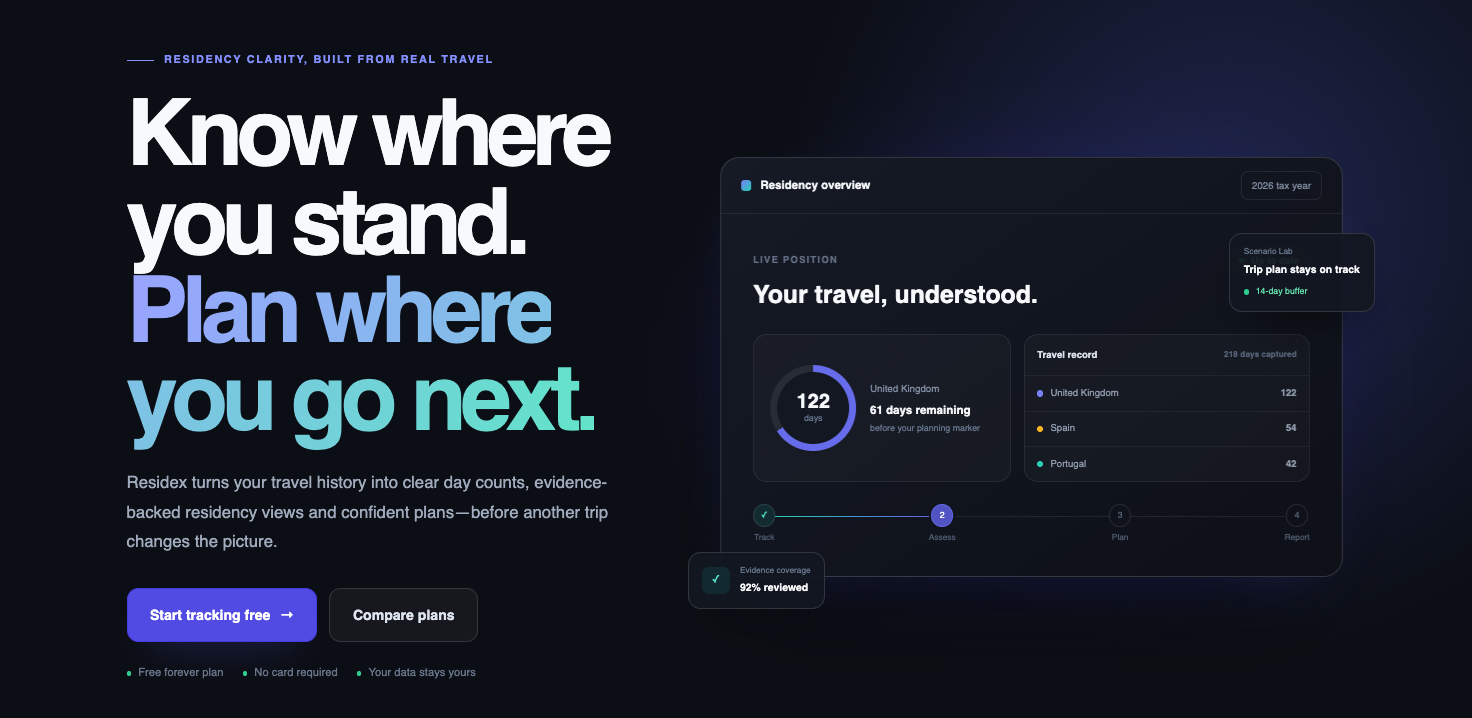
Track your residency For Free
Residex helps you track, assess and plan your tax residency with clarity, evidence & confidence.