
The "Tax Independence" Loophole: How Moveable Assets Can Legally Wipe Out Your Tax Bill This October
Subscribe to our newsletter for the latest expatriate news, views & analysis.
We often celebrate July 4th as the halfway mark of the standard calendar year. But for British expats and global investors, the real "Tax Independence Day" arrives at the beginning of October. This marks the exact midpoint of the unique UK tax year, opening up crucial windows for strategic cross-border tax savings.
By understanding how to balance the tax-free allowances of both your country of origin and your new country of residence, you can significantly optimise your financial position. However, maximising these savings requires masterfully timing your move, utilising split-year treatment, and properly categorising your assets.
Moveable vs. Immovable Assets: Where Does Your Money Live?
When planning a relocation, the nature of your income dictates where it can be legally taxed:
Moveable Assets (Pensions & Dividends): These assets generally "travel" with you. Once you establish tax residency abroad, these streams can often be taxed exclusively in your new country of residence, meaning they don't need to be declared or taxed in the UK.
Immovable Assets (Rental Income): Bricks and mortar stay put. Rental income from UK property remains strictly taxable by HMRC. The silver lining? You can still utilise your personal UK tax-free allowance against this income, even while living overseas.
Establishing 'Residence': What Does the Taxman Call Home?
To claim tax residency in a new jurisdiction, you cannot simply float in a nomadic void; you must establish a permanent home. Whether you own it, lease it, or stay with family, it needs to serve as a fixed base for the year.
However, defining a "permanent home" gets complicated when business or family life is spread across borders:
The Family Factor: If you own three properties in Cyprus but your family’s primary base is a single home in the UK, tax authorities will heavily weight the UK as your center of life. If a UK home is available to you for the whole tax year and you spend any time in it (with or without family), it remains a critical factor in defining your UK tax residency status.
Business, Remote Work, and the "Tie" Traps
For overseas investors and cross-border business owners, economic activity is a primary trigger for tax residency.
The 90-Day Rule: Generally, short business and holiday trips totalling under 90 days across a tax year are permissible. However, staying in the UK consistently from April through to October locks you directly into UK tax residency.
Remote Work Realities: If you work remotely from your country of tax residence for an overseas employer, you must ensure proper structures are in place. This might mean registering as a sole trader locally or setting up a local branch office/wholly-owned company.
Corporate Tax Advantages: Transitioning to a corporate structure can allow flat-rate corporation taxes to apply. These are often significantly lower than personal income tax rates and unlock the ability to draw income via lower-taxed dividends.
Critical UK Day Counts to Watch:
30 Days: Working remotely in the UK for more than 30 days can trigger a personal UK tax liability.
40 Days: Working in the UK for 40 days a year is legally considered an active "work tie."
Navigating the Statutory Residence Test: Are You Truly "Tied Down"?
The UK relies on an Automatic Overseas Test alongside a system of connecting "ties" (family, accommodation, work, etc.) to determine your status. Your path to remaining a non-resident depends entirely on your recent tax history:
If you have been out of the UK for more than 3 full tax years:

You are more insulated from ties.
Even with more than four UK ties, you can spend up to 45 days in the UK and remain a non-tax resident for the year.
To safely stay in the UK until the October midpoint as a non-resident, you must have one or fewer ties to the UK.
If you have been a UK tax resident in any of the previous 3 years:
The rules become incredibly strict. To qualify as a non-resident while staying into the first week of October, you must have absolutely zero ties to the UK.
If you have more than four ties, the maximum number of days you can step foot in the UK without triggering full tax residency is just 16 days.
Note: Spending 182 days or more in the UK is an automatic trigger for residency, and a stay of over 90 days acts as a lingering tax "tie" for the subsequent three tax years.
Domicile vs. Residence: A Changing Landscape
Where you are originally from heavily influences your tax status. Expats relocating to countries like Cyprus or Romania can still benefit immensely from local "non-dom" structures, which can offer up to 15 to 20 years of zero tax on worldwide income.
A Quick Regulatory Note: While the user notes mention traditional UK non-dom remittance benefits, it is important to highlight that the UK fundamentally overhauled this system. The traditional non-dom remittance rules were abolished and replaced with a 4-year residence-based Foreign Income and Gains (FIG) regime. Keeping up with these rapidly shifting global definitions is exactly why proactive planning is so vital.
The 11-Day UK "Calendar Fudge"
Ever wonder why the UK tax year arbitrarily starts on April 6th?
While countries like India align their spring tax years with traditional cultural holiday periods, the UK historically stuck to the old Julian calendar's New Year (the Spring Equinox on March 25th). When England finally adopted the Gregorian calendar in 1752, they had to skip 11 days to align with Europe. To ensure the Treasury didn't lose out on 11 days of tax revenue, they pushed the tax year-end forward by 11 days - creating the April 5th quirk we still live with today!
Reconciling Differing Tax Years
When your family or business operates across borders, you will inevitably face clashing tax calendars (e.g., a country using a standard December calendar year vs. the UK's April fiscal year).
Generally, these are reconciled by looking at the last two relevant tax year ends to ensure income isn't double-counted or improperly declared. For instance, a UK tax year ending in April will typically map against foreign tax returns filed for the preceding December.
Plan Ahead: Don't Wait for the Taxman
Tax freedom and strategic planning should start long before the tax year wraps up. Because an official tax assessment isn't truly confirmed until a tax return is reviewed - sometimes years down the line when you sell an asset, realise property wealth, or relocate again - errors can be incredibly costly.
If you want to ensure your cross-border business and family structures are fully optimised to benefit your family rather than the taxman, expert guidance is vital.
Contact ProACT Partnership today. We offer a free Consultant Review to new clients, alongside ongoing online advice and exclusive guidance for our ProACT Retained Clients. You can also check out our latest expat webinars on the ProACT Partnership YouTube channel.

Need help & guidance?
Contact us or book a free review with one of our expat experts today.
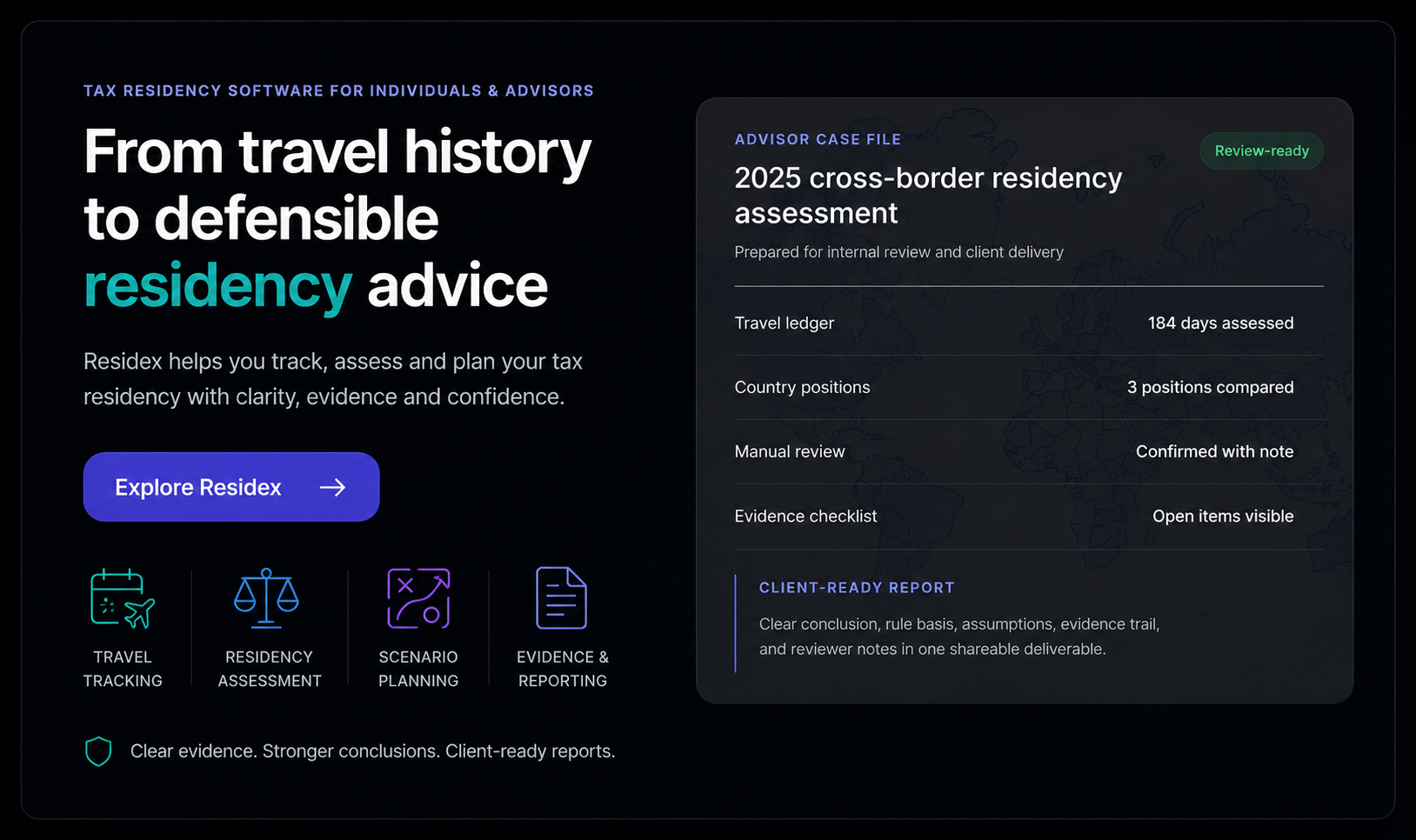
Residex
Residex helps you track, assess and plan your tax residency with clarity, evidence & confidence.
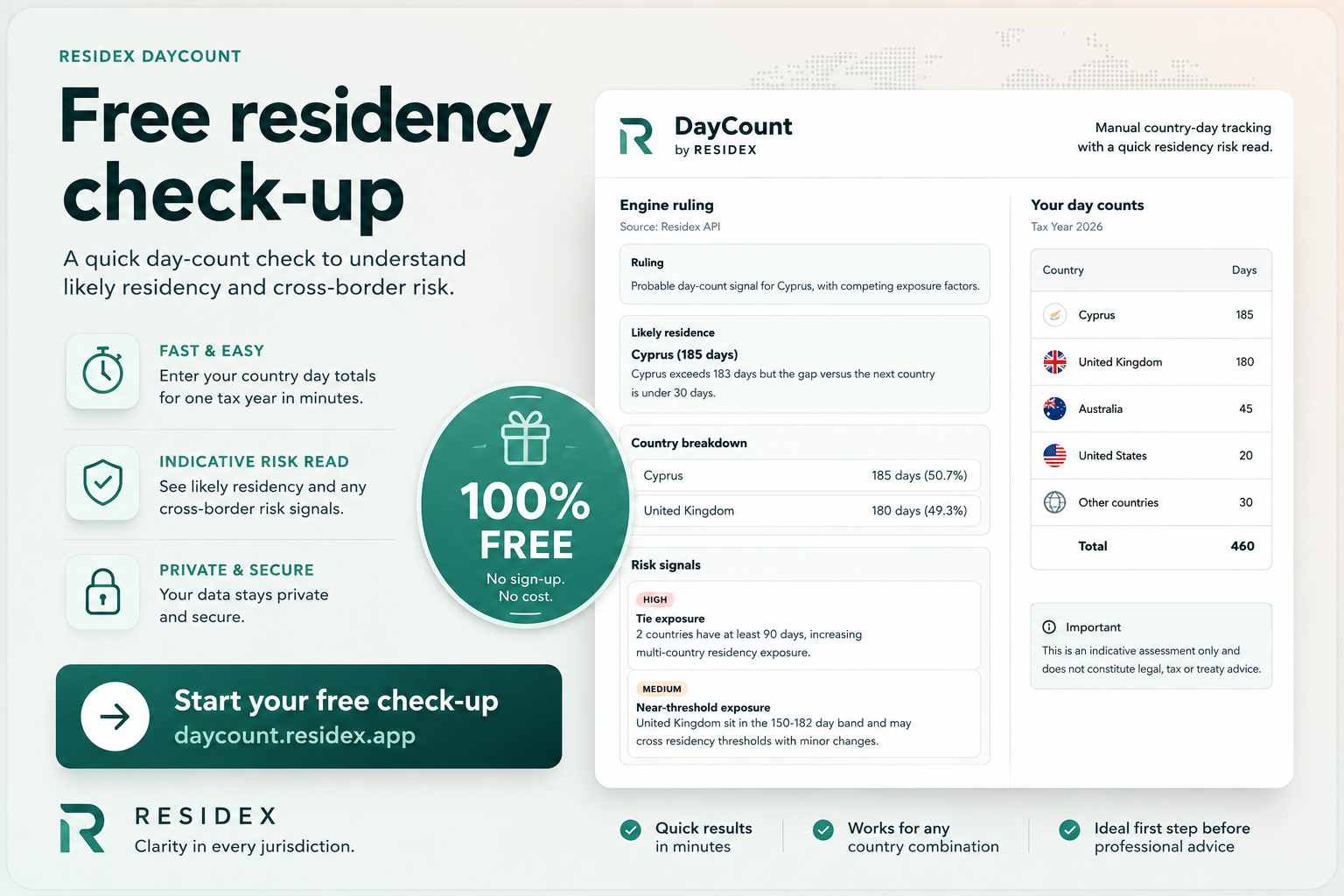
Get your free residency risk assessment.
We developed DayCount to allow you to enter the days you spend in a country and get a free quick residency risk assesment.